What does the lot look like in December?
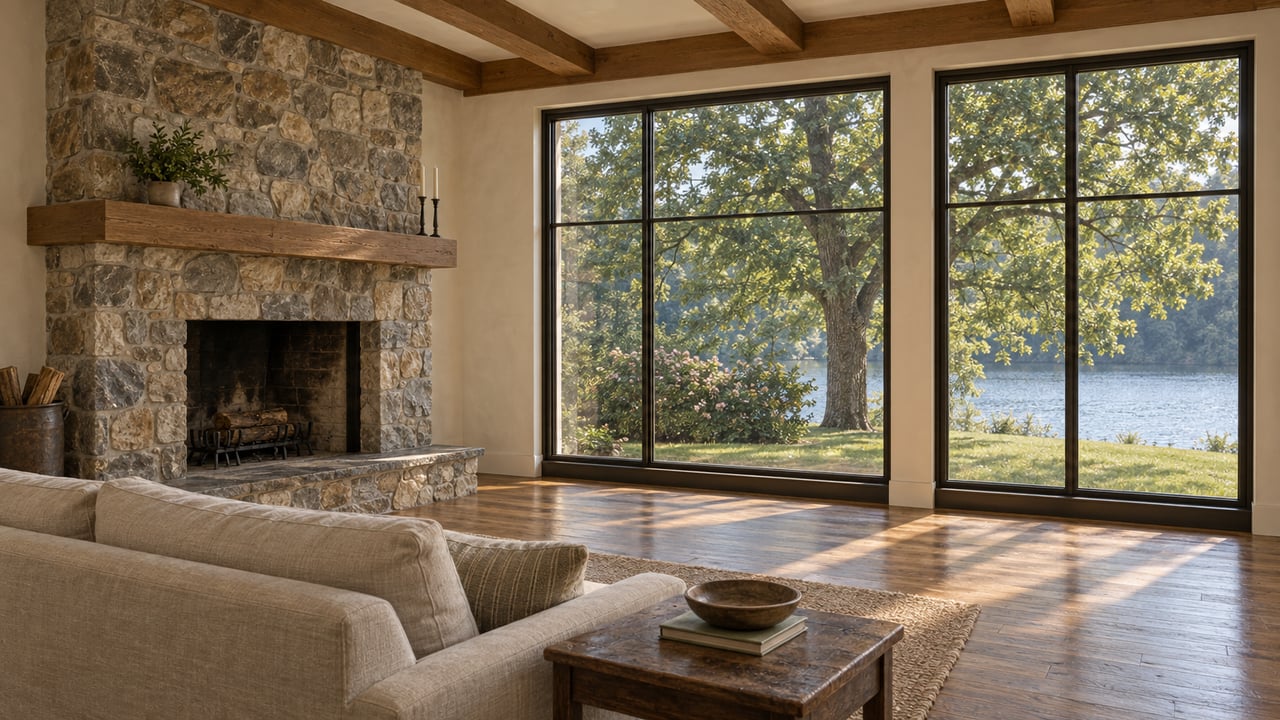
Most buyers touring waterfront property on Boone Lake never ask, because nobody schedules a showing in December. The lake sits at full summer pool, the dock floats high against the bank, and the listing photos catch all of it at its best. By the time a buyer is standing on that dock in July, the property has already been dressed for the season. It won't look like that again until spring.
Boone Lake runs on a cycle set by the Tennessee Valley Authority, and that cycle matters more to a buyer's actual ownership experience than most closing packets let on. TVA holds the reservoir at full summer pool, 1,382 feet, from roughly mid-May through Labor Day. After that, the agency begins a gradual drawdown toward winter pool at 1,362 feet, a twenty-foot drop the lake typically reaches by mid-December. In a WJHL report following one recent Labor Day announcement, TVA senior manager James Everett explained the timing: "once we get past Labor Day, we start to see lake levels come back down." Cindy Light, general manager of Jay's Boat Dock on Boone Lake, described what that means for the people who run docks and marinas day to day, also telling WJHL that her staff had been "without it for so long."
That twenty-foot swing is the first thing a summer showing hides. The second is bigger, and it has nothing to do with water level at all.
Checking the Dock's Permit Status
Docks, boathouses, seawalls, and most shoreline structures on Boone Lake exist because of a Section 26a permit issued under the TVA Act, the same authority TVA uses to regulate construction along its reservoirs. What a lot of buyers assume, reasonably, is that a dock they see in the listing photos comes with the property the same way the roof or the driveway does. The compliance record behind it is worth checking.
That responsibility is easy to miss during a July walkthrough, because a dock looks fine floating on a full lake. Slack tie-off cables, undersized pilings, and rip-rap that has crept past its permitted boundary tend to show up when the water drops, not when it's up. A buyer who only sees the property at full pool is, in a real sense, seeing it during the one season least likely to reveal a problem.
The practical fix is straightforward. Before writing an offer on a waterfront lot, ask the seller or listing agent whether the dock, boathouse, or shoreline stabilization has a permit on file, and ask to see it. TVA's own shoreline and dock permit guidance is public, and a buyer's agent or closing attorney can request confirmation directly rather than taking a seller's word for it.
The Septic Setback That Shrinks the Buildable Lot
TVA's rules reach below the waterline too. On land the agency owns outright, known as fee-owned property, TVA does not permit residential septic tanks or field lines at all. On land where TVA has granted a license or easement for private use, a septic system can be considered under local health department rules, but only if it maintains a 50 foot horizontal and 2 foot vertical separation from the shoreline boundary. That standard sits on top of, not instead of, Tennessee's statewide septic rules, which the Tennessee Department of Environment and Conservation says require every installation to go through a Construction Permit from the county's environmental health office before a licensed installer can put a system in the ground.
For a wide, deep lot this rarely changes anything. For the narrow cove lots that make up a lot of Boone Lake's waterfront inventory in Piney Flats, it changes quite a bit. A one acre lot with 150 feet of road frontage and a shallow depth to the water can lose a meaningful share of its usable footprint once the TVA buffer and the septic field itself are all drawn on the same site plan. Several current Boone Lake cove listings in Piney Flats, including tracts marketed as Turkey Ridge Estates, are offered at four, five, and nearly eight acres rather than the one acre lots common elsewhere on the lake. Extra acreage can provide more room outside the shoreline buffer for a code-compliant system.
A soil evaluation from a state-licensed installer, done before an offer rather than after, answers the question a listing photo can't: whether the lot actually has room for a house and a septic field once every setback is subtracted from the total acreage.
Two Lakes, One Property
| Full Summer Pool | Winter Pool | |
|---|---|---|
| Elevation | 1,382 feet | 1,362 feet |
| Typical season | Mid-May through Labor Day | Reached by mid-December |
| Drawdown | Stable | Gradual after Labor Day |
The difference between the two elevations is the same twenty feet Everett described. It's also the reason a buyer who tours a shoreline lot once, in July, has only ever seen one half of the property's actual character. Docks that float comfortably at full pool can sit well above the water by December. Coves that look like open water in the photos can narrow into mudflats. None of that is a defect. It's how the reservoir has operated for decades, and the Boone Lake Association tracks water level updates and TVA communications year round for residents who want to follow it closely.
What This Means If You're Touring This Fall
Fall is actually a useful time to look at Boone Lake property, precisely because the lake is mid-drawdown and shows more of its true self than a July showing ever will. A few things worth asking before writing an offer on a waterfront lot:
- Does the dock, boathouse, or seawall have a Section 26a permit on file with TVA, and can the seller produce it
- Has a licensed installer confirmed the lot has room for a septic field outside the TVA shoreline buffer
- Has this property, or a comparable one nearby, been seen at winter pool, and if not, would a fall or winter visit change the offer
None of these questions require a lawyer to ask. They require asking before the inspection period closes, not after.
A couple of things buyers ask
Does every dock on Boone Lake need a TVA permit? Any structure built on, in, over, or along the reservoir, including docks, boathouses, and shoreline stabilization, falls under TVA's Section 26a authority. Some older structures may predate current documentation, which is exactly why confirming permit status before closing matters more than assuming it.
Can I put a septic system right up to the water's edge if I have a large lot? No. Even on privately held shoreline land, TVA requires a 50 foot horizontal and 2 foot vertical separation from the boundary before a septic system can be considered, on top of whatever Tennessee's statewide construction permit process requires through the county health department.
Boone Lake rewards patience more than most waterfront markets, because so much of what determines a lot's real value sits below the surface, literally and administratively. A permit history, a soil evaluation, and a second visit after Labor Day tell a buyer more than a single summer showing ever will.
If you're comparing waterfront lots on Boone Lake and want a second set of eyes on permit history, septic buildable area, or timing a showing around the drawdown, Ivey Schmidt can walk the property with you and help sort out what a listing photo won't show.
This article is general information, not legal, tax or financial advice. Consult a qualified professional about your situation.