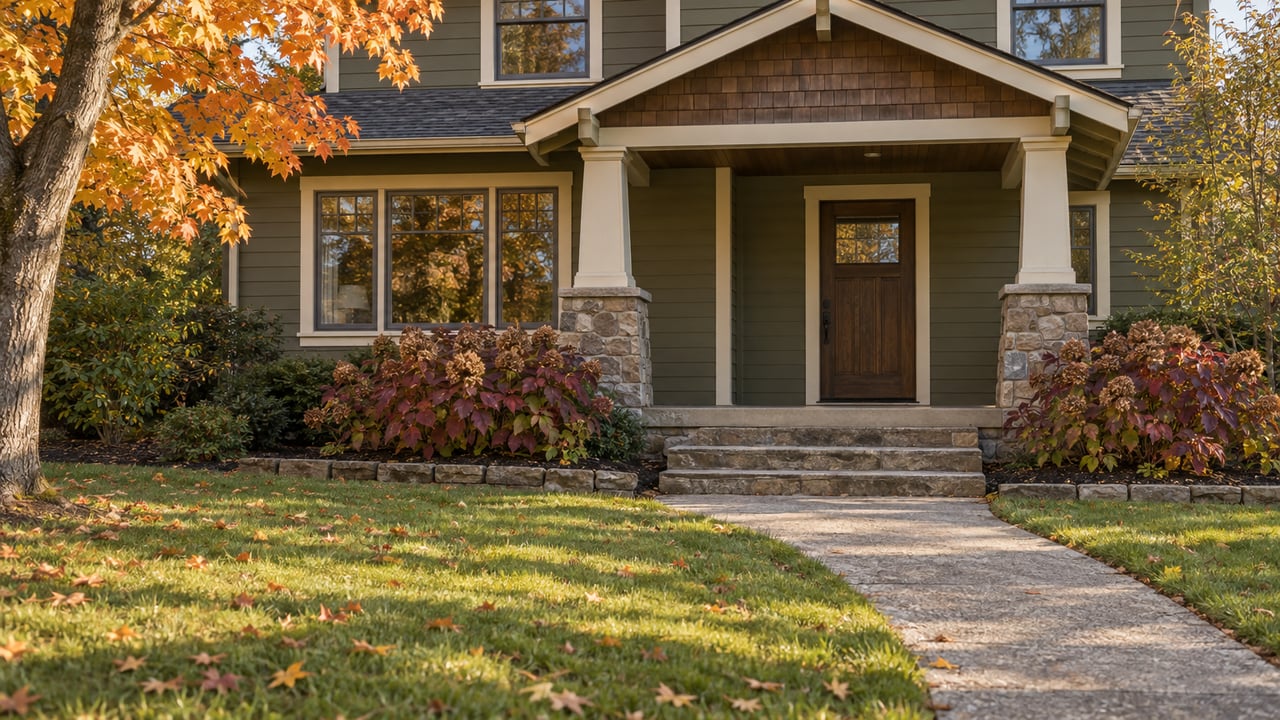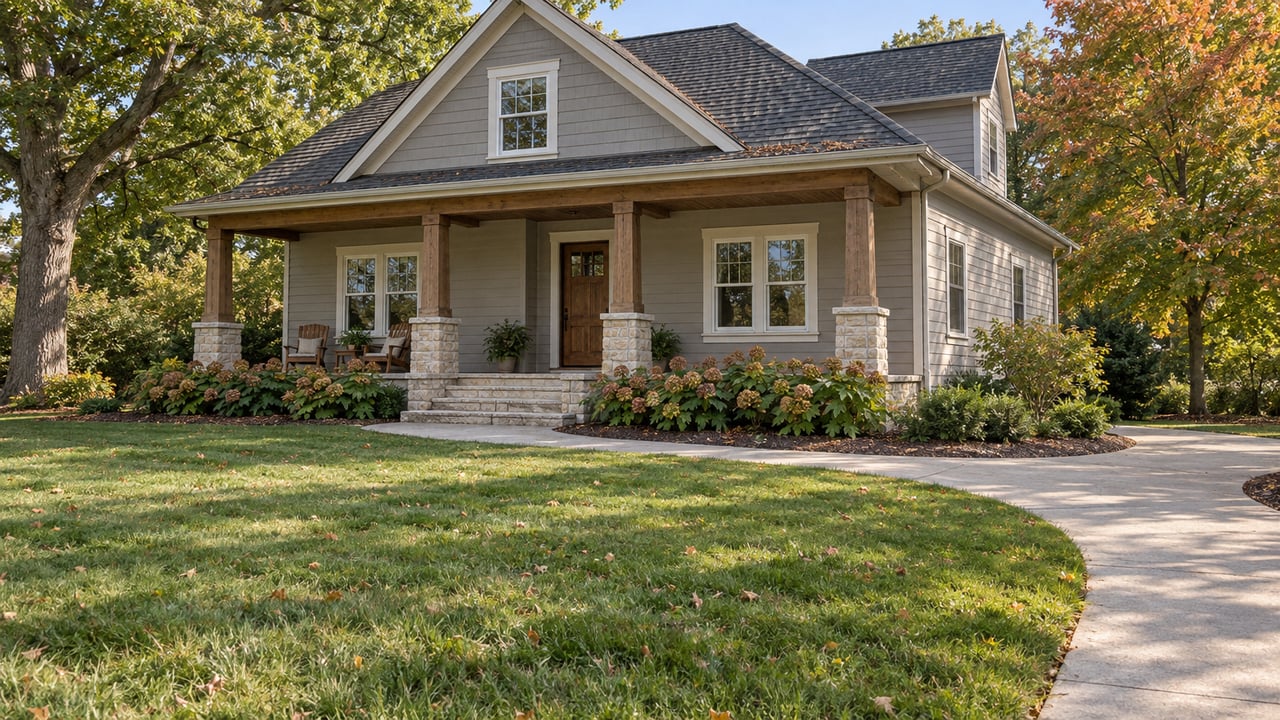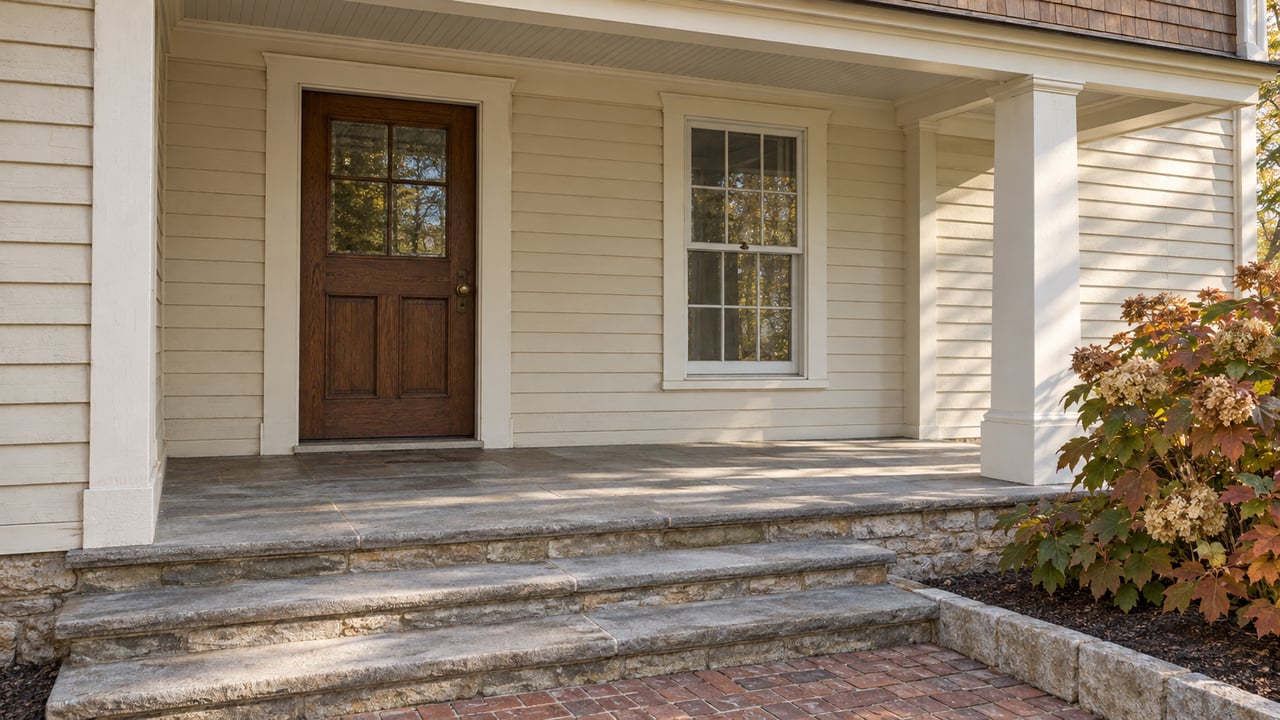
"The primary difference in the status change for a historic property is that demolition of the property would not be allowed now or in the future." That sentence comes from the Jonesborough Historic Zoning Commission's September 24, 2026 agenda packet. It describes something that happened to several houses inside the town's historic overlay this year, and the packet says age was the main reason.
The commission has finished its Property Designation review. Several properties that were rated non-contributing to Jonesborough's historic character in 2002 and 2003 are now rated contributing, and the packet says this was "mainly due to the properties now being more than 50 years old." The HZC plans to mail letters to those owners in November.
If you're buying or selling in the H-1 or H-2 overlay this fall, here's the practical point. A house's options can be set by its age and by a review done on the commission's schedule. They don't depend on anything that comes up in a normal sale, and the standard paperwork in a Tennessee transaction won't tell you about them.
The Disclosure Form Doesn't Ask
The Residential Property Condition Disclosure, a Tennessee REALTORS® form known as RF201, asks about "zoning violations, nonconforming uses and/or violations of 'setback' requirements." It asks about subdivision and deed restrictions. It asks whether the property sits in a Planned Unit Development. None of its questions name historic district status or historic zoning.
The state statute requires a disclosure about the property's condition, "including any material defects known to the owner." Neither the statute nor the form settles whether a historic overlay restriction counts as a material defect. That depends on the facts of the case and is a question for an attorney, not a checklist.
Some transfers are exempt from the disclosure requirement entirely. The statute lists certain fiduciary and court-ordered transfers, certain transfers between family members, and sales where the owner hasn't lived in the property during the previous three years. That last exemption matters in a town where some historic houses belong to owners who live somewhere else.
So a buyer can get through a whole Jonesborough transaction without any document saying the house is regulated. The November letters raise the stakes. Some owners will learn their status changed only when the letter arrives, and a house sold this fall could close before or after it does.
What "Contributing" Rules Out
Demolition inside the overlay already required a Certificate of Appropriateness, and the commission's procedures call for at least two public meetings before one is decided. The H-2 standards go further for contributing properties and bar demolition unless the structure is a public safety hazard that can't be eliminated by economic means or preserving it would cause undue economic hardship. The packet's plain-language summary says demolition "would not be allowed now or in the future," so for a newly contributing house, those narrow exceptions are what remain.
This matters most for buyers who look at a modest older house on a good lot and picture a teardown and rebuild. A house that passed 50 years old since the 2002 and 2003 ratings may no longer allow that plan. The district's boundaries didn't change to cause this. In January 2026, the Board approved a corrected H-1 and H-2 map, and the commission said it kept the same properties that had been included for more than 25 years. Proposed additions to the overlay are still being reviewed. They would need a recommendation to the Mayor and Board of Aldermen and two readings before taking effect.
The Chimney at 500 W. Main Street
Demolition is the far end of the rules. Day-to-day ownership of a house in the overlay comes down to smaller decisions, and a June 2026 case shows how they play out.
On June 11, the owner of 500 W. Main St. asked to replace the asphalt shingles with Pinnacle Pristine "Black Shadow" shingles, put in a new rear door, replace the gutters, paint the trim English Brown, and stain the deck. The owner also asked to remove the chimney on the back of the house, saying it was in poor condition.
The commission approved everything except the chimney. Chairman Frank Collins noted that the Standards and Guidelines don't allow chimney removal. Commissioners suggested taking the brick down to the first band and re-pointing it, and several of them, who'd had similar work done on their own homes, shared contractor contacts with the owner. The vote to deny removal was unanimous.
For a buyer, a chimney in poor condition on a house under these standards is a repair you'll have to make, not a feature you can remove. A good inspection report will flag it. Only the commission's standards tell you which way it has to go. The written H-1 standards lean the same way. They favor keeping and repairing historic material, and they allow replacement only on conditions.
What Gets Approved, and How
The commission approves most requests, often unanimously. Approval still means a public hearing, a written application, and work that matches the standards.
| Address | Request | Outcome |
|---|---|---|
| 213 E. Main St. | 31 black solar panels on several roof planes, with the west plane screened by evergreen vegetation | Approved unanimously, August 2025 |
| 140 Boone St. | Composite deck plus replacement siding, doors and windows | Approved unanimously, January 2026 |
| 305 W. Main St. | Porch rail changes and window repair or replacement | Approved unanimously, January 2026 |
| 200 S. Cherokee St. | New front picket fence in pressure-treated pine, painted to match the house | Approved unanimously, April 2026 |
| 103 Sevier Ave. | Window and door changes, porch enclosed for a mudroom and laundry | Approved unanimously, April 2026 |
| 109 Courthouse Square | Masonry and stucco foundation work, side windows, custom oak door | Approved unanimously, September 2026 |
The Town's Historic Zoning Commission page says advance approval covers exterior work, including new construction, renovations, and exterior maintenance. Its examples include paint, re-roofing, storm windows and doors, lighting, and additions. The Building Inspector won't issue a building permit for exterior work in the district without HZC approval and a Certificate of Appropriateness. Private interior renovations aren't reviewed.
The written standards cover more than many buyers expect. Front window openings can't be blocked or newly cut. Replacement windows have to fit the historic openings. Changing a glazing pattern requires historical documentation for that specific building. Historic wood siding can't simply be covered with modern sheet materials. Exposed historic masonry can't be painted over to create a new look.
Some routine work qualifies for expedited approval instead of a full hearing under the HZC policies and procedures. The procedures list same-color painting, matching roof and gutter work, minor like-for-like carpentry, glazing, and identical fence repairs as examples.
The Commission Also Keeps Track of Upkeep
Approval only comes into play when an owner wants to change something. The HZC also keeps a demolition-by-neglect list of properties showing enough deterioration to threaten their long-term survival, and it asks the building inspector for a professional opinion on each one.
The September 2026 status notes show the commission follows up about properties. In one case, exterior repairs were made between late July and early August, and the chairman has asked for an update on further work. At 505 W. Main St., the owner agreed to repair the upper and lower porch by December 2026, and equipment was on site. The packet also lists a few addresses where owners are getting estimates to repaint bare wood.
This matters most if you inherited a historic house, or you own one from out of town and plan to sell. Deferred exterior maintenance on a contributing property can draw a letter from the commission before a listing goes live. When you set a price, plan for exterior repairs that will have to follow the standards.
A Pre-Offer Check for the Overlay
Before the inspection period ends on a house in or near the district:
- Confirm whether the property is in the H-1 or H-2 overlay, and whether its 2026 rating is contributing. Don't assume the 2002 and 2003 rating still applies.
- Read the recent HZC minutes for the address. Past requests and decisions are public and searchable by street.
- Ask the inspector to note the chimneys, original windows, wood siding, and exposed masonry. The standards favor repairing these over replacing them.
- If you're planning a project, map out the timeline. The commission meets at 6 p.m. on the second and fourth Thursdays from January through October, and on the second Thursday in November and December, at Town Hall, 123 Boone St. Applications are due by the first or third Friday to make the next agenda.
- Price exterior repairs on the assumption that they'll match the existing materials.
A Few Questions That Come Up
Does the commission charge a fee? No. The September packet says the HZC never charges fees. It also warns that at least two people who presented at meetings got scam invoices by email that used details from the minutes and asked them to wire money.
What if the commission doesn't act on my application? The historic zoning provisions in the Town code say an application is deemed approved if no final action happens within 30 days of a complete application, unless both sides agree to an extension.
Is there money to help with exterior work? The Town's façade grant reimburses up to $2,500, or 50% of eligible costs up to $5,000. It applies to certain commercial and mixed-use properties, not purely residential ones, and the work needs HZC approval first.
Can I put solar panels on a historic house? The guidelines don't give solar a blanket exemption, but the commission has approved panels. At 213 E. Main St., it weighed how visible the panels would be and how they'd be screened before approving them.
If you're considering a house in Jonesborough's historic overlay, or preparing to sell one before the November letters go out, Ivey Schmidt can help you confirm the property's status, read its HZC history, and build a timeline that takes the commission's schedule into account. Let's Connect.
This article is general information, not legal, tax or financial advice. Consult a qualified professional about your situation.